Why Young Women Are the Most Stressed Workers in Australia
Insights into rising workplace distress and how organisations can support mental wellbeing
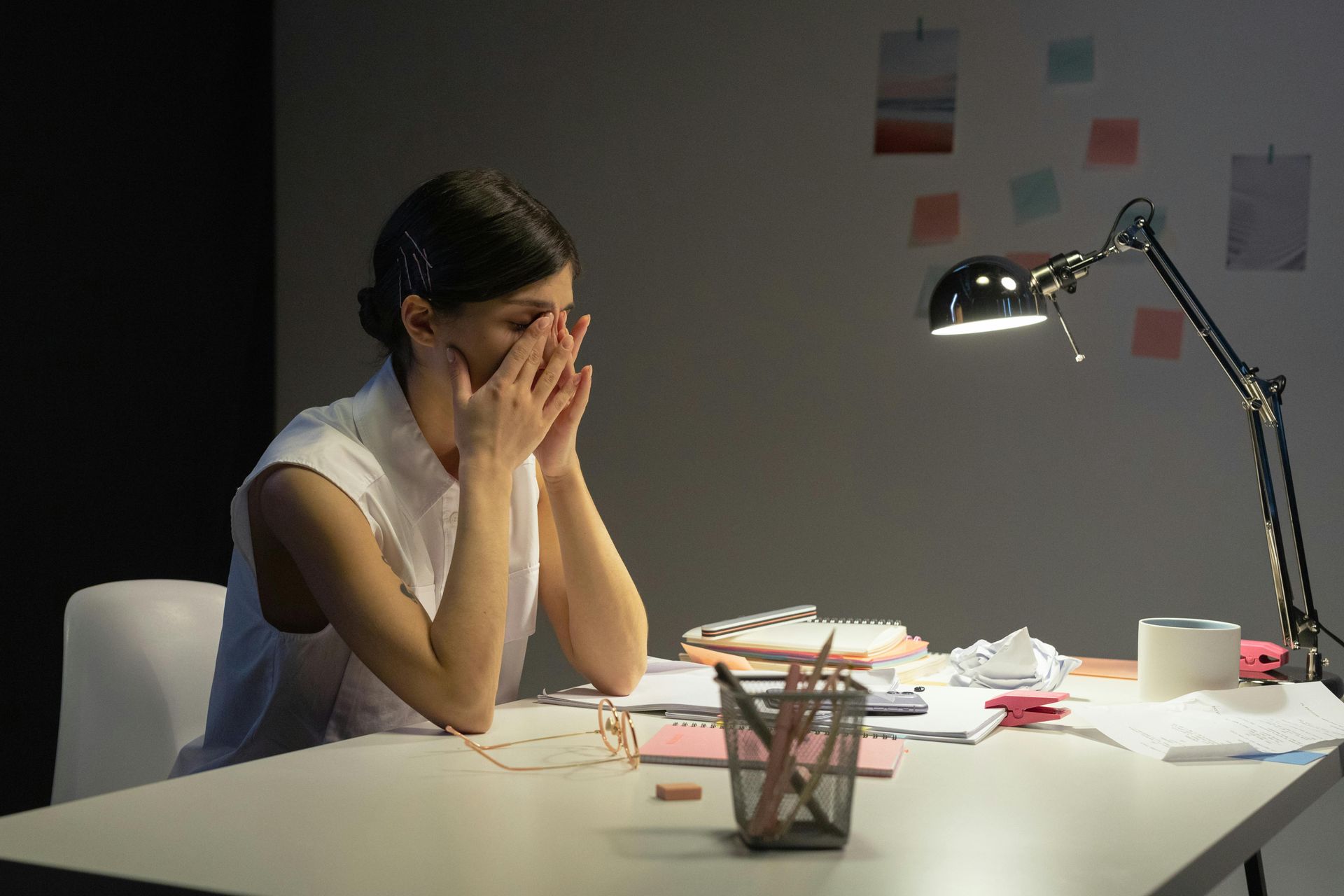
Australia’s workforce is experiencing a quiet but significant mental health crisis. While psychological distress affects workers of all ages and genders, recent research highlights that young women are particularly vulnerable, consistently reporting higher levels of stress, anxiety, and burnout than their male and older peers. This trend has implications not only for individual wellbeing but also for workplace productivity, retention, and culture.
A landmark study from Macquarie University found that workers aged 18–29 were more than twice as likely to experience high psychological distress compared to older adults, and women were significantly more likely to report distress than men, even after accounting for other factors such as employment industry (Burns et al., 2025).
Understanding the drivers, consequences, and solutions for psychological distress among young women is essential for organisations aiming to foster a resilient, healthy workforce.
Prevalence and Trends of Psychological Distress
The HILDA Survey, a nationally representative longitudinal study, demonstrates a concerning rise in psychological distress among young Australians. In the 2023 data, women aged 15–24 reported Kessler-10 (K10) scores indicating high or very high distress at rates nearly double those of men in the same age group.
Similarly, the Australian Longitudinal Study on Women’s Health found that women aged 19–26 consistently report higher distress scores than their male counterparts and older women (Loxton et al., 2021). These results suggest that young women are experiencing sustained, elevated stress levels during the early stages of their careers and adult lives.
Nationally, the Australian Bureau of Statistics (ABS) reports that psychological distress is not only prevalent but also growing among younger cohorts, with implications for mental health services, workplace programs, and public health policy.
Why Young Women Are Particularly Vulnerable
Multiple factors contribute to the heightened psychological distress observed in young women:
Biological Susceptibility
Young adults are still undergoing neurobiological and emotional development, which affects stress processing. Research shows that the hypothalamic-pituitary-adrenal (HPA) axis, the body’s central stress response system, may be more reactive in young women, particularly during early adulthood (Patton et al., 2016). This heightened reactivity can translate to increased physiological and emotional responses to stressors, including workplace challenges.
Societal Pressures
Gendered expectations contribute to unique stressors. Young women often navigate competing demands related to education, early career development, caregiving responsibilities, and social expectations. These intersecting pressures can increase feelings of overwhelm and exacerbate psychological distress (Women’s Health Victoria, 2023).
Occupational Factors
Workplace conditions can further heighten stress risk. Young women are disproportionately represented in casual, low-control, or insecure employment, which is strongly associated with psychological distress (Monash Impact, 2022). Even without considering job type specifically, these structural factors contribute to a higher burden of workplace stress for young women.
Life-Stage Stressors
Transitions from study to work, financial pressures, housing instability, and relationship challenges create additional stress. When combined with societal and occupational pressures, these factors amplify the risk of chronic stress and mental health challenges.
Consequences of Psychological Distress
Mental Health Outcomes
Persistent stress in young women is linked to anxiety, depression, burnout, and sleep disturbances. Without timely intervention, these conditions can become chronic, affecting both personal and professional life.
Physical Health Outcomes
Chronic psychological distress activates the HPA axis, increasing cortisol and other stress hormones. Over time, this can affect immune function, cardiovascular health, and metabolic regulation, contributing to long-term physical health risks (Lupien et al., 2009).
Workplace Outcomes
Psychological distress affects workplace performance in measurable ways. Workers experiencing high distress report:
- Increased absenteeism: More sick days due to mental health issues
- Presenteeism: Reduced productivity while at work
- Turnover: Greater likelihood of leaving jobs or being underemployed
The Macquarie University study estimates that highly distressed workers experience over 20 additional lost workdays per year compared to less distressed peers (Burns et al., 2025). These outcomes create a cycle where personal stress affects work, and workplace stress feeds back into personal wellbeing, further escalating distress.
Scientific Mechanisms of Stress
Stress impacts both brain and body. When confronted with stressors, the HPA axis triggers cortisol release, which helps the body respond in the short term. However, chronic activation can impair cognitive function, emotional regulation, and memory, while increasing vulnerability to anxiety and depression (Lupien et al., 2009).
Young women may be particularly sensitive to social and occupational stressors, potentially explaining the higher prevalence of distress in this group. Long-term effects of untreated stress include cardiovascular disease, metabolic syndrome, and decreased immune function highlighting the importance of early intervention.
Evidence-Based Strategies to Reduce Distress
Addressing psychological distress requires a multi-level approach, incorporating individual, organisational, and policy-level interventions.
Individual Strategies
- Psychological support: Therapy and counselling tailored to young women’s experiences
- Coaching and resilience training: Strength-based interventions to build coping skills
- Mindfulness and stress management: Techniques that reduce physiological stress responses
Organisational Strategies
- Flexible work arrangements: Part-time, remote, or adjustable schedules reduce stress burden
- Supportive supervision: Managers trained to recognise and respond to distress
- Mental health programs: Workplace initiatives promoting awareness, early intervention, and peer support
Policy-Level Strategies
- Job security and equitable pay: Reducing structural inequalities that disproportionately affect young women
- Gender-aware mental health policies: Ensuring programs and services address the unique needs of women in early adulthood
How 11th hour clinic Supports Young Women
At 11th hour clinic, we provide evidence-based psychological services, coaching, and workplace wellbeing programs designed to address the specific needs of young women in the workforce. Our approach combines:
- Early identification and support for high-stress employees
- Strength-based coaching to build resilience and performance
- Organisational consulting to create supportive, low-stress work environments
By integrating science-backed interventions with practical workplace solutions, we help both individuals and organisations reduce distress, enhance wellbeing, and improve productivity.
Take Action Today
Psychological distress in young women is a pressing workplace issue. Early intervention can prevent long-term consequences for both employees and organisations.
Contact the 11th hour clinic to explore tailored solutions, including:
- Individual psychological support
- Coaching for resilience and performance
- Organisational wellbeing programs
Book a consultation now and take the first step toward a healthier, more resilient workforce.
Conclusion
Research consistently demonstrates that young women are at higher risk of psychological distress in Australia’s workforce. Biological, social, occupational, and life-stage factors intersect to create unique vulnerabilities.
By understanding the prevalence, mechanisms, and consequences of distress, organisations and individuals can implement evidence-based strategies to reduce risk and promote wellbeing. Supporting young women in the workforce is not only a moral imperative but also a practical investment in healthier, more productive workplaces.
References
Burns K, Ellis LA, De Almeida Neto A, Amin J. (2025). Workforce psychological distress and absenteeism in Australia: the correlates of industry, age, and gender. Asia‑Pacific Journal of Public Health.
HILDA Survey. (2023). Trends in psychological distress among young Australians.
Loxton D, et al. (2021). Psychological distress in young Australian women: Findings from the Australian Longitudinal Study on Women’s Health.
Butterworth P, et al. (2023). The impact of psychological distress on workforce productivity in Australia.
Monash Impact. (2022). Young women in casual and low-control work: implications for mental health.
Women’s Health Victoria. (2023). Towards a gendered understanding of women’s experiences of mental health and the mental health system.
Patton GC, et al. (2016). The impact of health on the mental health of young people. Lancet.
Lupien SJ, et al. (2009). Effects of stress throughout the lifespan on the brain, behaviour and cognition. Nat Rev Neurosci.